






How to Care for Wet Leather Tack After a Rainy Ride
.png?ts=1778853549&imgeng=/w_auto,1920
)
Wet leather doesn't just look dirty. The fibers are swelling, the natural oils are being displaced, and every hour you wait makes the next step harder. Water doesn't sit on the surface of leather the way it sits on rubber or synthetic material. It moves through the grain, and as it does, it pushes out the fats and oils that keep leather supple and load-bearing. What you're left with, once it dries untreated, is a hide that has lost the internal lubrication it needs to flex without cracking.The sequence of what you do next matters as much as the products you reach for. Conditioning before the leather is fully clean traps grime against the fiber. Drying too fast, near a heat source, causes the surface to contract before the interior moisture has cleared. Both mistakes compound over time, showing up not as a single crack but as a slow stiffening that one day becomes a broken stitch or a split cheekpiece at the worst possible moment.Treating a wet ride as a minor inconvenience is where most tack damage actually starts. The good news is that the right routine, done in the right order, costs less time than repairing what neglect leaves behind.
Before the Routine Forks
After the soap, the routine splits. Boots and chaps take daily abrasion, stirrup leather grinding against the shaft, your calf pressing into the horse's side stride after stride. Bridles and breastplates work differently: they flex under tension, sit exposed to rain and sweat, and dry stiff if you let them. The leather is the same material, but the stress it absorbs is not.
That distinction is what drives the product choice at the end of the process. A conditioning cream that works beautifully on a bridle cheekpiece, keeping it supple through repeated flexion, may not hold up to the surface friction a tall boot faces every ride. Boots and chaps need something that sits on the surface and protects it; bridles and breastplates need something that penetrates and feeds the fiber from within. Getting that backwards doesn't ruin your tack overnight, but it shortens its life in ways you won't notice until a seam starts to give.
.png?ts=1778853482?imgeng=/w_auto,640)
Boots and Chaps: Finish with Cream or Balm
Boot leather takes the hardest punishment on a wet ride. Stirrup friction, mud spray, the constant flex at the ankle: all of it works against the surface while the leather is already softened by moisture. Once the boots are clean and fully dry, the finishing step is about rebuilding that surface resilience before the next outing. Work either the Soft Leather Cream Almond or the Leather Almond Care Balm in with circular motions, small sections at a time. The circular motion matters: it pushes the product into the grain rather than just coating the top. Let it absorb for a few minutes, then buff off the excess with a clean cloth. Both products carry almond oil as the conditioning agent, which penetrates without leaving a greasy film that attracts arena dust. The difference is texture. The cream is lighter and absorbs faster, which suits thinner chap leather well. The balm is denser, better suited to tall boots that need a bit more protection at the toe and heel where abrasion concentrates. Either way, the goal is the same: leather that bends without cracking and sheds the next downpour rather than soaking it in.
Leather Almond Care Balm

Nourish & Protect with Soft Leather Cream
.png?ts=1778853483?imgeng=/w_auto,640)
Bridles and Breastplates: Add an Oil Finish
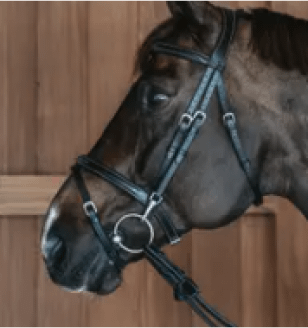
Bridles and breastplates earn one extra step that most riders skip: Leather Almond Care Oil, worked into every surface with a brush, cloth or sponge left to penetrate for a few minutes, then the excess lifted away with a clean cloth. The reasoning matters. These are the pieces under constant tension, the cheekpieces flexing with every head movement, the breastplate pulling against the chest at a canter. Leather that stays dry and stiff at those stress points doesn't just feel rough, it starts to crack from the inside out, and rain accelerates that process by drawing out the natural oils faster than normal use would. The almond oil base penetrates rather than sitting on the surface, which means it's conditioning the fiber structure, not just coating it. Apply it after your usual clean and condition pass, not instead of it. A bridle that comes off a wet ride, gets cleaned, conditioned, and then finished with an oil treatment is a bridle that will outlast several seasons of hard weather. That last step is the difference between tack that ages well and tack that just ages.
Leather Almond Care Oil
