






Fly Season for Horses: The Complete Guide to Keeping Your Horse Comfortable and Protected

There is a version of the first warm turnout that every rider pictures: the gate swings open, the horse walks out quietly, grazes in the early sun. What actually happens, once the season tips, is something else. The flies arrive, the horse stops grazing and starts moving, and within twenty minutes a pleasant morning has become a welfare problem wearing the costume of a minor inconvenience.
That distinction matters. Flies are not simply uncomfortable for horses; they disrupt rest, interrupt feeding, and carry the kind of low-grade stress that shows up later, under saddle, in ways that are easy to misread. A horse that has spent four hours stamping and head-tossing in the field is not the same horse that walked through the gate.
The instinct is to react when it gets bad. The better move is to build a routine before it does. Layered protection, across pasture, stable, and ridden work, does not need to be complicated, but it does need to be in place before peak pressure arrives, not assembled in a panic once it already has.
Flies cost horses more than comfort
A horse that spends four hours stamping, twitching, and circling the field hasn't rested. It has burned energy, disrupted its own digestion, and arrived at the stable gate already wound up, before you've touched a girth or picked up a rein. That physical cost is easy to underestimate because the horse looks fine. It walked in, it's eating. But the nervous system doesn't reset that quickly. Sustained fly pressure keeps a horse in a low-grade state of alert. Skin twitching and tail swishing are reflexes, not choices, and when those reflexes fire continuously for hours, the muscles doing the work fatigue. More importantly, the horse never drops into the calm, parasympathetic state where genuine rest and recovery happen. A horse denied that recovery window is a horse that brings tension into every subsequent interaction.This is why the tense horse in the school and the restless horse in the paddock are so often the same horse. A fly rug left off on a warm morning, an unprotected face, a stable with no repellent routine: none of it is a minor oversight. They compound across a season, and the rider feels it long after the flies have gone in for the evening.
What sustained fly pressure actually does
- Excessive tearing and eye irritation Flies clustering around the eyes trigger constant watering, crust build-up, and in persistent cases, conjunctivitis that needs veterinary attention.
- Broken skin from repeated rubbing A horse that rubs its face, mane, or tail against fence posts will eventually open the skin, creating wounds that attract even more flies.
- Stamping-related hoof and leg stress Continuous stomping to dislodge leg flies puts repetitive concussive force through joints and hooves, a quiet accumulation most owners don't register until lameness appears.
- Weight loss from disrupted grazing A horse that spends more time fleeing and head-tossing than eating will drop condition across a summer, even on otherwise adequate pasture.
- Heightened tension carried into work Skin sensitised by hours of fly irritation means a horse arrives at the mounting block already reactive, making softness and focus harder to establish under saddle.
Step 1: Protect the Pasture Hours
.png?ts=1778504980?imgeng=/w_auto,640)
Choosing the Perfect Fly Rug for Your Horse
Picture a horse turned out on a warm summer morning, constantly tail-swishing, stomping, and reacting to flies instead of relaxing. The right fly protection changes that completely — not by removing the flies, but by helping the horse stay calm and comfortable throughout the day.
Choosing the right fly rug depends on the weather, the horse’s sensitivity, and its daily routine. Some horses only need lightweight protection on mild days, while others benefit from extra coverage during peak fly season or long turnout hours.
That is why different options exist. Neck covers help protect sensitive areas around the mane and shoulders, belly covers offer extra protection underneath the horse, waterproof fly rugs are ideal for changing summer weather, and eczema rugs provide maximum coverage for horses prone to itching and irritation.
Fly protection is not only important in the pasture. Horses can also benefit from protection in the stable or during transport, especially on warm days with high fly pressure. Adapting protection to the horse and the situation is what makes the biggest difference throughout fly season.
Step 2: Guard the eyes, ears, and nose

A fly mask protects the most sensitive areas a fly rug simply cannot reach.
You have seen it: a horse standing at the far corner of the field, head dropped, eyes half-shut, flies working the wet corners of each eye and clustering at the base of the ears. It does not look like distress. It looks like resignation, which is almost worse. That stillness is not rest; it is a horse that has stopped bothering to react because reacting no longer helps. A fly rug covers the horse's body and the neck, but it stops well short of the face. The eyes and ears are exactly where flies cause the most concentrated irritation, and they are the one zone a rug cannot reach. Persistent fly activity around the eyes is directly linked to the spread of conditions like conjunctivitis, and the constant head-shaking and ear-pinning it provokes carries its own cumulative toll on a horse's baseline tension. A horse that has spent six hours fighting its own face will not stand quietly at the mounting block. For horses with any sensitivity at all, a well-fitted fly mask is not a luxury addition to the summer kit list. It is the starting point. The rug handles the body; the mask handles everything the rug cannot.Step 3: Keep flies out of your schooling session
.png?ts=1778504972?imgeng=/w_auto,640)
A nose net is the smallest change with the clearest payoff
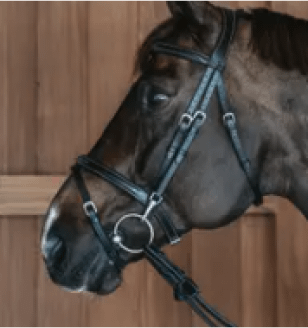
You know the moment. The horse has been going well, supple, tracking up, and then the head shoots sideways, the rhythm breaks, and you spend the next three strides wondering what you did wrong. You did nothing. There are flies clustering at the muzzle, and the horse is doing exactly what a horse does: reacting to something you cannot feel from the saddle. A fly nose net sits over the noseband and creates a fine mesh barrier across the muzzle without restricting breathing or bit contact. The horse stops flinching at that specific trigger. The session you planned actually happens. It sounds like a minor fix because it is a minor piece of kit, but the payoff is disproportionate: muzzle-clustering is one of the most reliably disruptive things flies do during ridden work, and also one of the easiest to address. That is, in a way, the whole argument of a layered routine. The field horse that has been protected from dawn, rugged, masked, in a managed paddock, arrives at the mounting block already settled. The nose net keeps him there. It is the same animal throughout the day, and what you do for him at 6 AM shows up in your schooling at 6 PM.